Introduction
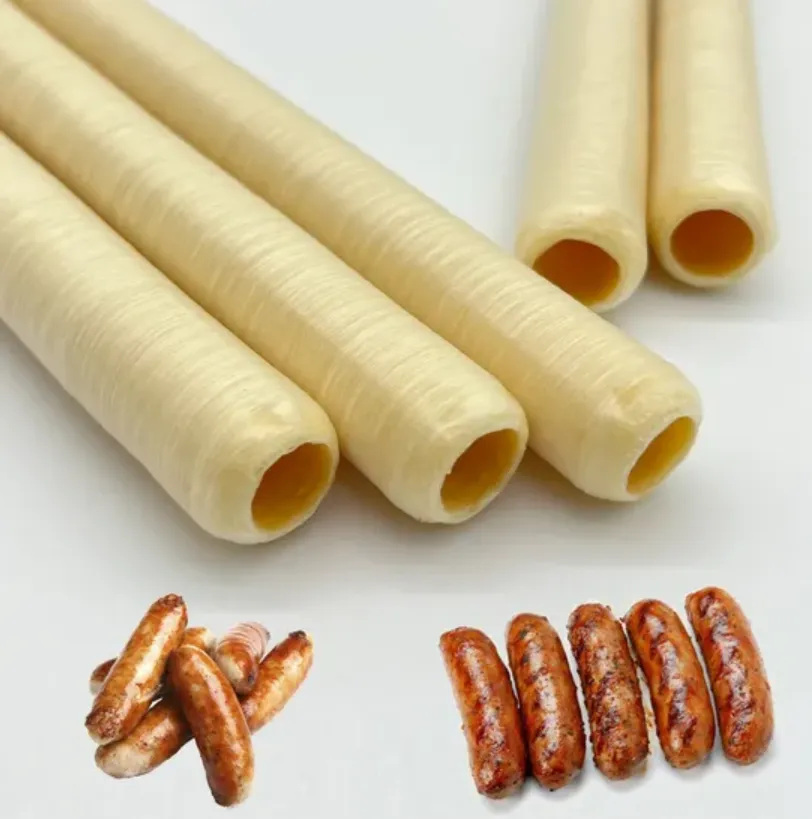
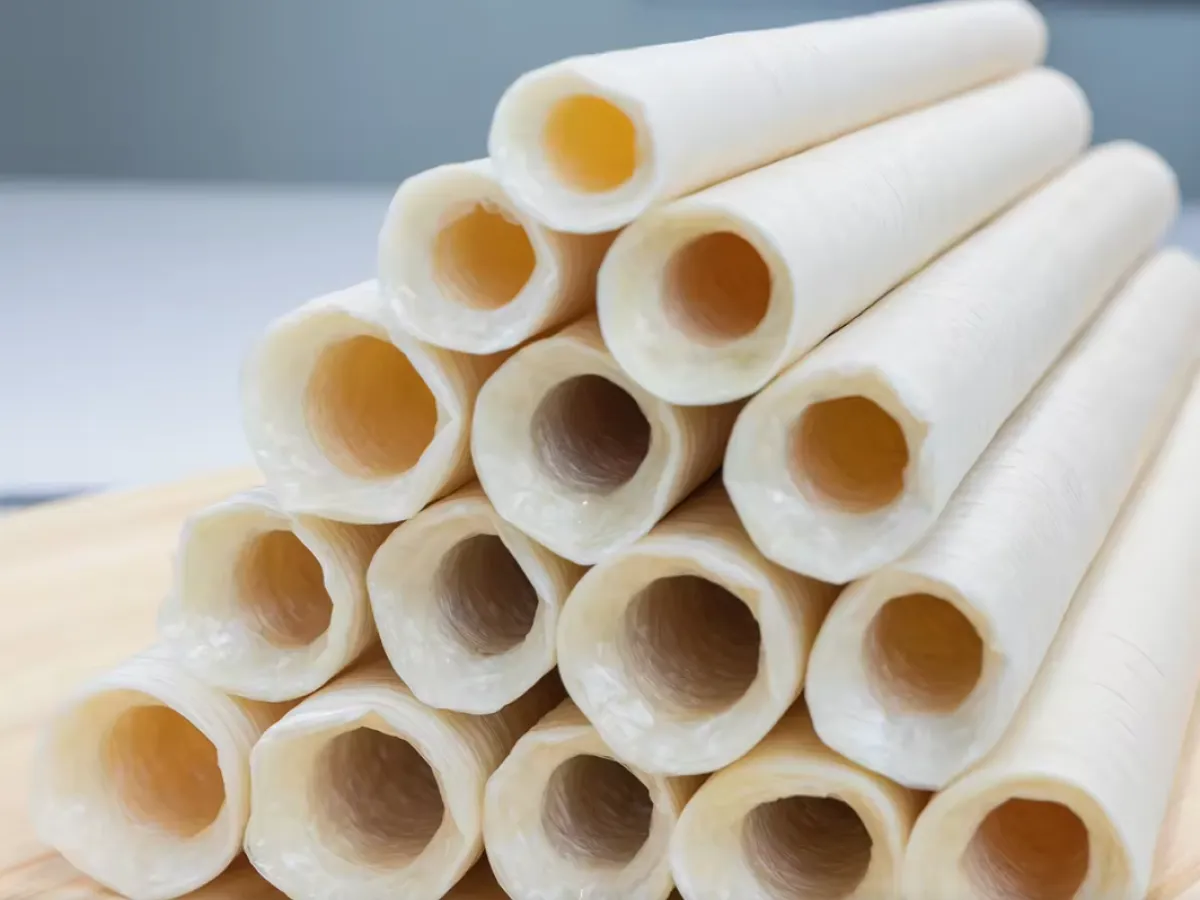
Collagen casings are the only manufactured casing that can be either edible or non-edible depending on formulation and intended end use. This dual nature is both an advantage and a source of confusion. A producer who orders “collagen casing” without specifying the type may receive a product that behaves very differently from what the production line expects—one that is eaten with the sausage, versus one that must be peeled away.
The distinction is not merely a labeling detail. It determines the casing’s wall thickness, mechanical strength, permeability, preparation protocol, caliber range, and ultimately which products can be made with it. This guide breaks down the differences across material composition, performance, processing, and application, and closes with a practical selection framework.
The Fundamental Distinction
Both edible and non-edible collagen casings share the same base raw material: collagen protein extracted from bovine or porcine hide. What separates them is formulation and structural design.
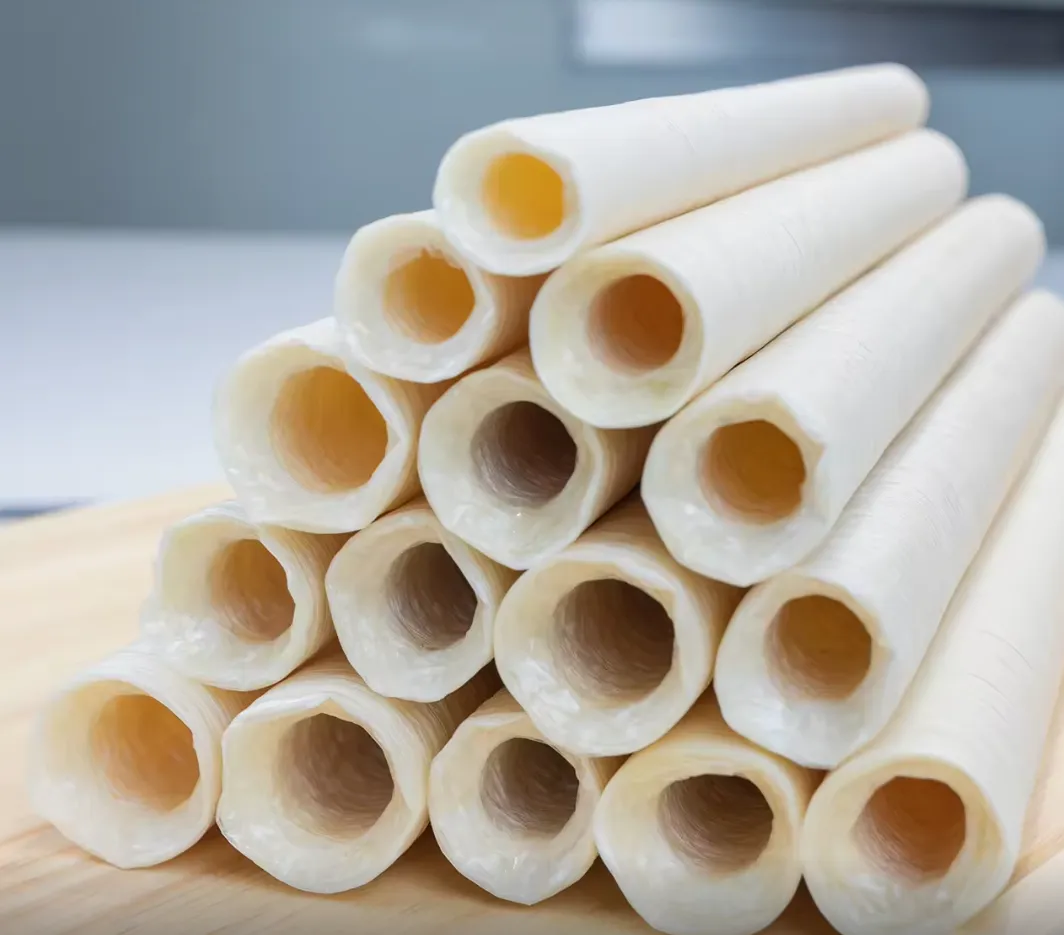
Edible collagen casing is manufactured in thin-walled, small-caliber strands (typically 13–32 mm) designed to be consumed with the product. It is tender, permeable to smoke and moisture, and requires no preparation before stuffing.
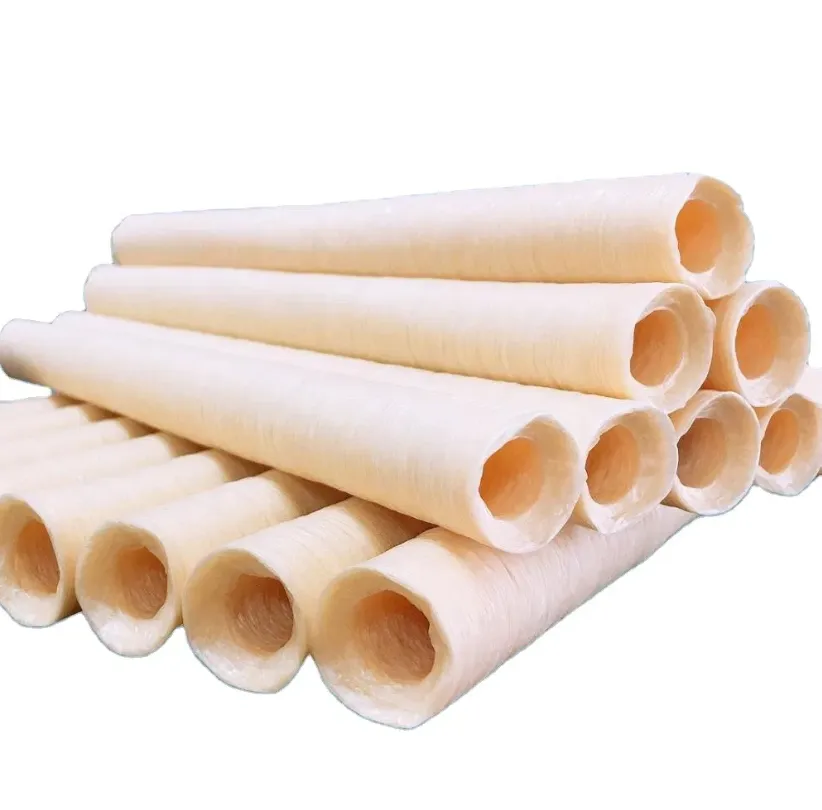
Non-edible collagen casing is produced with higher collagen cross-linking, greater wall thickness, and larger calibers (typically 40–100 mm and above). It is engineered for strength, dimensional stability during long processing cycles, and clean peelability after cooking or drying. It is not intended for consumption and is removed before eating.
A common misconception is that “non-edible collagen casing” is the same as cellulose casing. It is not. Cellulose casings are made from plant fiber and are a separate product category. Non-edible collagen casings remain collagen-based; they are simply formulated and processed differently.
Physical and Performance Differences
Wall Thickness and Strength
The most measurable difference is wall thickness. Edible collagen casings are thin-walled, typically in the range of 35–75 μm for small-caliber strands. Non-edible collagen casings have substantially thicker walls, generally 40–150 μm, with higher collagen cross-linking that imparts greater tensile strength and resistance to bursting under stuffing pressure.
This thickness difference explains why non-edible casings can withstand the pressure of large-diameter stuffing and the mechanical stress of clipping, hanging, and extended drying, while edible casings are optimized for tenderness and bite rather than maximum strength.
Permeability and Smoke Response
Edible collagen casings are permeable to smoke and water vapor, allowing smoke components to penetrate and develop color and flavor during smoking. Smoke penetration depth in collagen casings is limited, typically ranging from 2 to 6 mm depending on smoking intensity.
Non-edible casings are also smoke-permeable but are often engineered with a different permeability profile to support controlled moisture loss during drying and fermentation. For dry and semi-dry sausages, this moisture management is critical to achieving the desired texture and shelf stability.
Caliber Range
Edible collagen casings are predominantly small to medium caliber, commonly 13–32 mm for fresh, smoked, and snack applications. While some edible products extend into the low 30s, the practical upper limit for edible casings is constrained by the eating experience—a very thick edible casing would be unpleasant to chew.
Non-edible collagen casings are designed for large calibers, typically 40 mm and above, extending to 100 mm or more for products such as summer sausage, salami, and cooked hams.
Processing and Handling: The Critical “Do Not Soak” Rule
The handling protocols for the two casing types are fundamentally different, and confusing them is a leading cause of production failure.
Edible collagen casings require no soaking. They are used dry, straight from the package. The instruction is explicit across industry sources: “Do not soak edible collagen casings! Stuff edible casings dry”. Moisture disrupts the casing’s structural integrity and can cause it to fall apart during stuffing or cooking.
Non-edible collagen casings generally require soaking before use. Standard guidance is to soak in warm water or a non-iodized salt solution for 3–5 minutes to restore flexibility and prevent cracking during stuffing. Some modern “ready-to-stuff” non-edible variants have been developed to eliminate this soaking step, but the traditional product still requires rehydration.
This asymmetry in preparation is a useful diagnostic: if a collagen casing is supplied as a small shirred strand and the instructions say “do not soak,” it is almost certainly edible. If it is a large, flat, or pre-tied casing that requires soaking, it is non-edible.
Application Matrix: Which Casing for Which Product
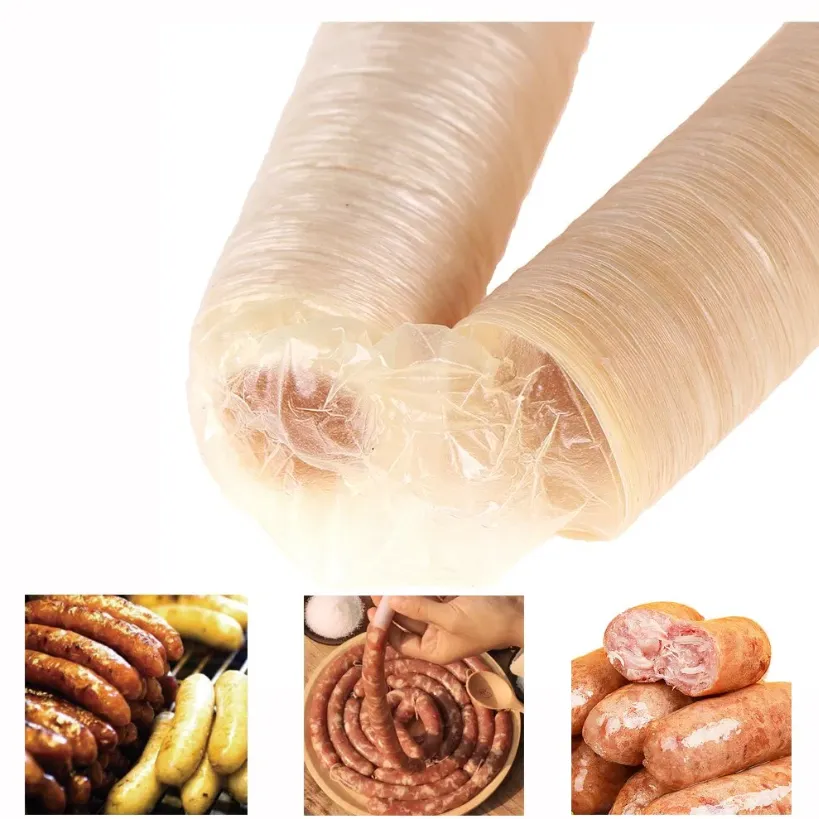
The choice between edible and non-edible collagen casing maps closely to the product being manufactured and the role the casing plays in the final eating experience.
|
Smoked links (hot dogs, mettwurst, kielbasa) |
Edible |
Consumed with product; smoke permeability for color and flavor |
|
Snack sticks |
Edible |
Small diameter; eaten directly; edible casing eliminates peeling |
|
Frankfurters & wieners |
Edible (or cellulose peelable) |
Edible option for whole consumption; peelable cellulose for skinless style |
|
Summer sausage |
Non-Edible |
Large diameter; casing peeled before slicing; needs strength and peelability |
|
Salami & pepperoni |
Non-Edible |
Dry-cured; casing removed; high strength and controlled moisture permeability required |
|
Bologna & mortadella |
Non-Edible |
Large diameter; peeled; dimensional stability during cooking |
|
Cooked hams |
Non-Edible |
Large format; casing removed post-processing; needs structural integrity |
|
Fresh sausages (breakfast links, bratwurst, Italian) |
Edible |
Casing is eaten; tender bite required; no soaking simplifies production |
Market Context and Trends
The global collagen casing market is growing, but the edible segment is expanding faster than the non-edible segment. One market analysis projects edible collagen casings growing at a 4.9% CAGR, reaching approximately US$1.3 billion by the end of the forecast period, while non-edible casings grow at 3.8% CAGR.
This growth differential reflects broader trends in the processed meat industry: the expansion of protein snacking, the rise of private-label retail products, and the modernization of small and medium processors adopting automated stuffing and continuous cook-smoke systems. Edible small-caliber casings are the primary beneficiary of these trends because they support the high-speed, no-peeling production of snack sticks, breakfast links, and hot dogs.
Non-edible casings remain essential for the large-diameter, dry-cured, and deli-style product categories where peelability and dimensional strength are non-negotiable.
Selection Framework: A Decision Checklist
When specifying a collagen casing, work through the following questions:
1. Will the casing be eaten? If yes, specify edible. If the product is peeled before serving or slicing, specify non-edible.
2. What is the finished caliber? Small calibers (under roughly 35 mm) are predominantly edible; large calibers (40 mm and above) are predominantly non-edible.
3. Does the process require soaking? Edible casings are used dry. If the workflow includes a soaking step, confirm that the specified casing is the non-edible type designed for rehydration.
4. What mechanical demands does the process impose? High-speed automated linking, clipping, and hanging of large products require the strength and dimensional stability of non-edible casings. Fresh and smoked links prioritize tenderness and bite.
5. Is peelability a requirement? If the product must release cleanly from the casing after cooking or drying, non-edible collagen (or cellulose) is the appropriate choice.
Summary
Edible and non-edible collagen casings are not interchangeable variants of the same product. They differ in wall thickness, strength, caliber range, permeability profile, and—critically—preparation protocol. Edible casings are thin, tender, used dry, and designed to become part of the sausage. Non-edible casings are thicker, stronger, typically soaked before use, and engineered for large-diameter products where the casing is a processing tool to be removed.
Specifying the correct type at the point of purchase prevents production errors, avoids wasted casing and meat, and ensures that the final product delivers the eating experience the market expects.
Company Information
Nourisi Group, as the leading manufacturer and supplier of collagen casing for 20 years’ experience since 2006, committed to innovation and continuous improvement, and growing together with our customers globally.
Please feel free to get in touch with us at any time should you have any questions or concerns regarding casing selection.
Collagen casings are the only manufactured casing that can be either edible or non-edible depending on formulation and intended end use. This dual nature is both an advantage and a

Porridges and soups are typical multi-phase systems: water, starches, proteins, and solid particles coexist. During heating, filling, sterilization, and storage, particles tend to
The most core role of gelatin in gummies is as a gelling agent, building the entire skeletal structure of the gummy. Gelatin is derived from the partial hydrolysis of animal collag
Plant-based meat alternatives have evolved significantly in terms of protein sources, flavor systems, and processing technologies. Yet replicating the juiciness, tenderness, and mo
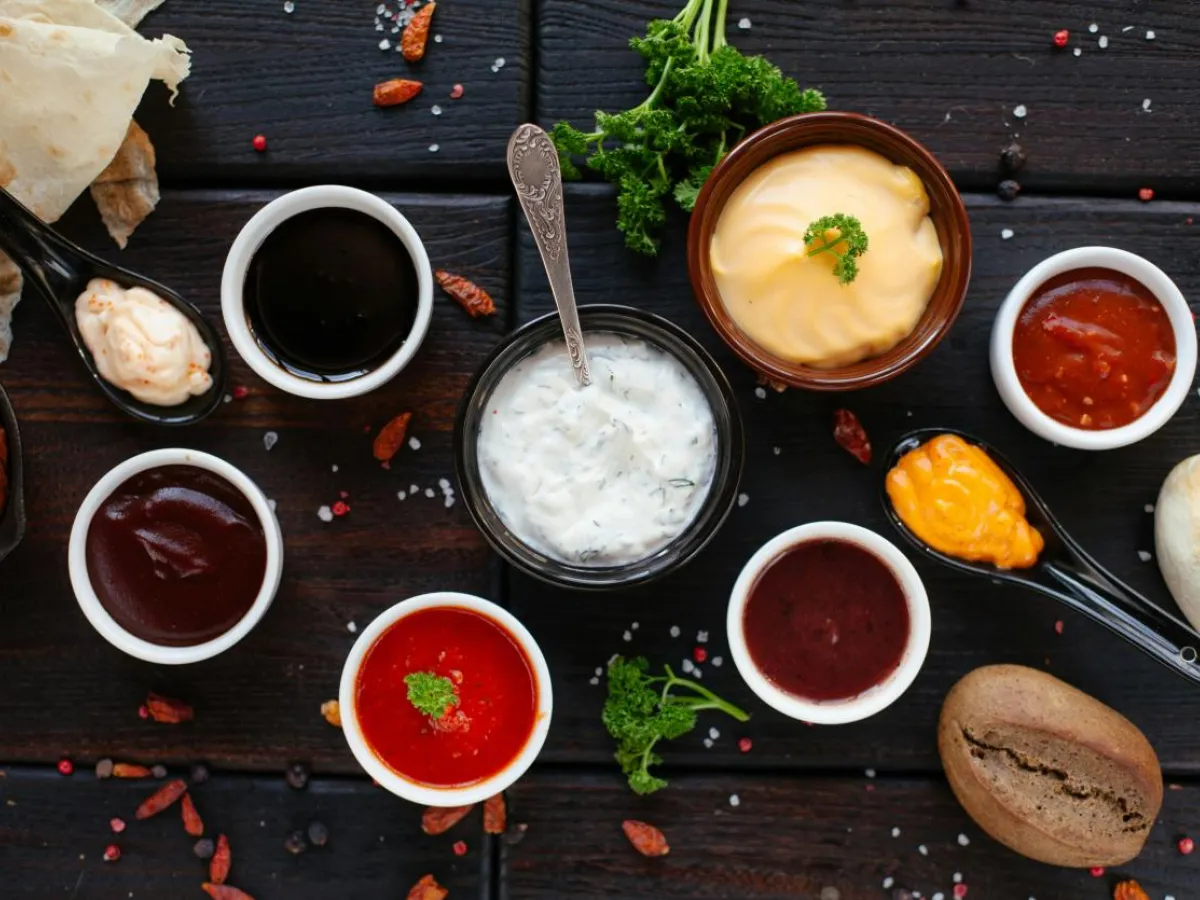
Pregelatinized starch solves this problem. This physically modified starch has already been cooked and dried during production, giving it the ability to absorb water and swell at a
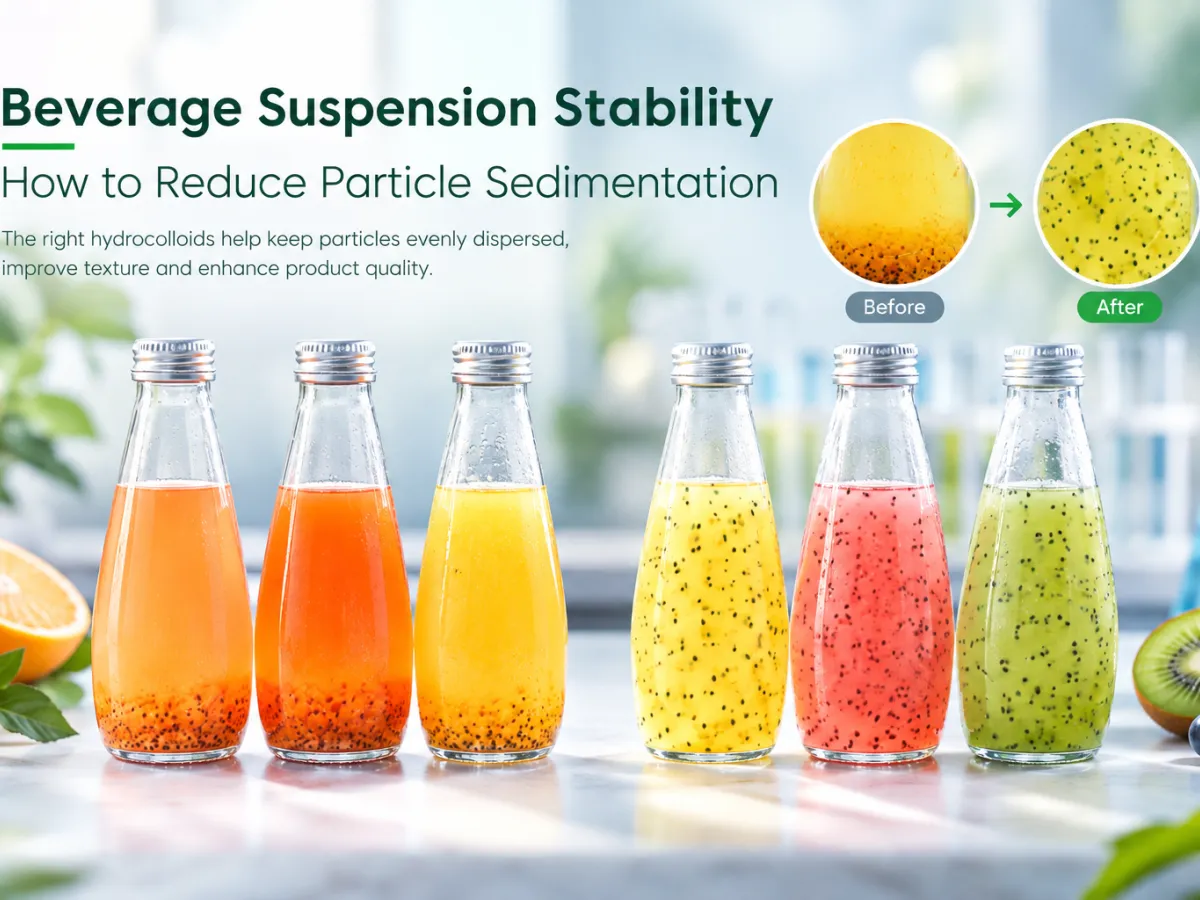
With the development of beverages containing fruit pieces, plant-based particles, fruit juice, and functional ingredients, food manufacturers are increasingly focusing on product a

As a classic clarifying agent, the mechanism of gelatin in beverage clarification is quite ingenious. Gelatin is a protein carrying a positive charge, while many of the turbid subs

In simple terms, it is pectin that has gone through an additional "ammonia treatment" step during production, which attaches amide groups to the pectin molecule.
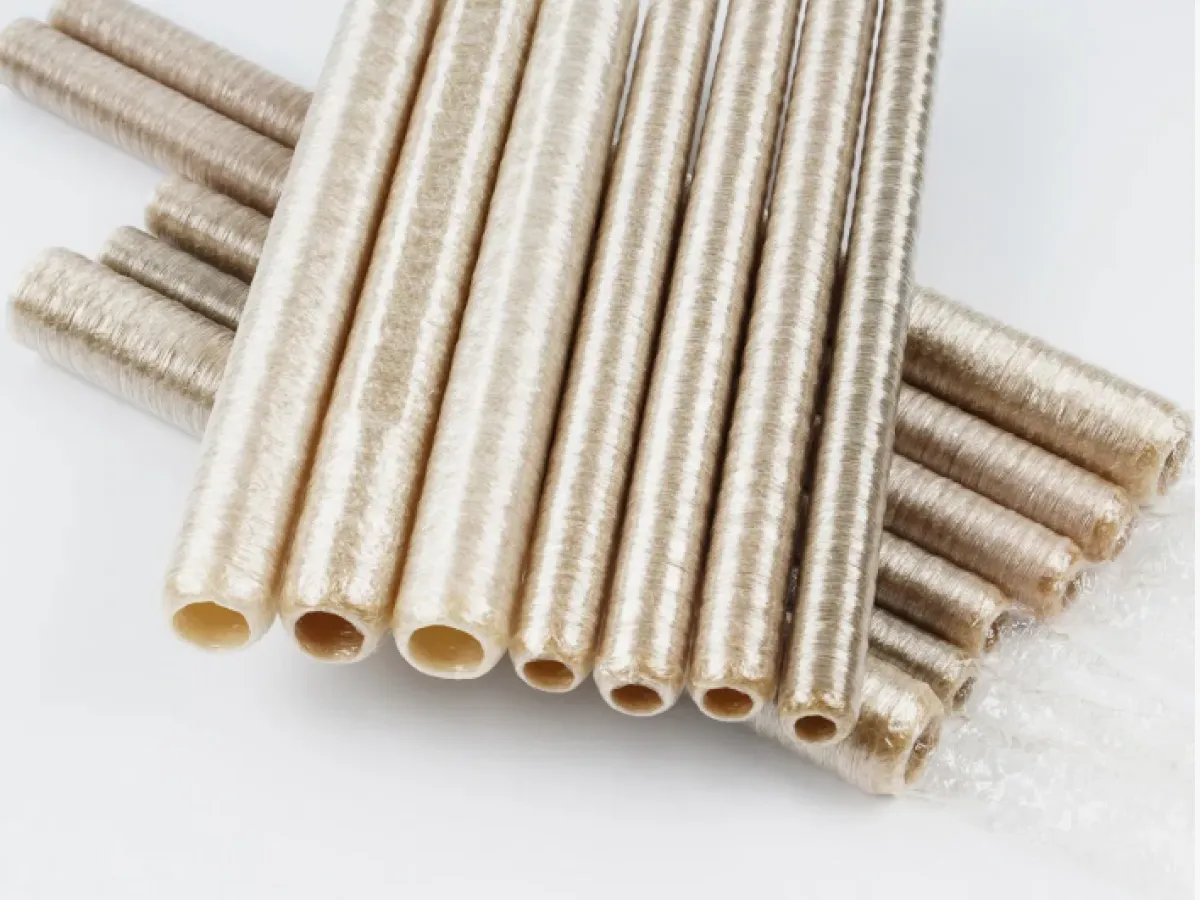
This guide provides a detailed comparison to help you determine which casing type best fits your production requirements.
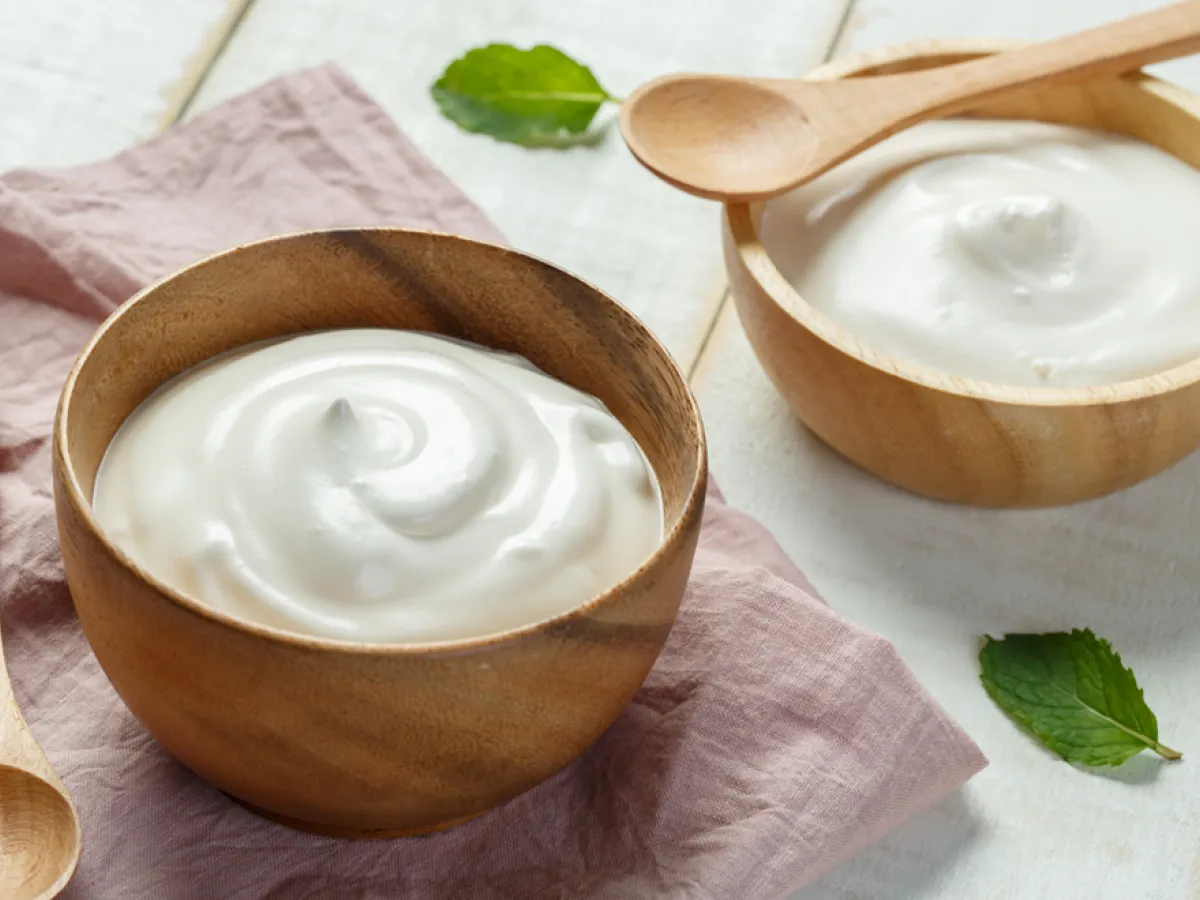
The casein gel network formed during yogurt fermentation is structurally fragile and prone to rupture during transportation or refrigeration, leading to whey separation. Upon cooli