When developing dietary supplements, plant-based gummies, nutritional bars, encapsulated active ingredients, or plant-based dairy desserts, formulators often confuse sodium alginate with carrageenan. Although both are derived from seaweed, they cannot simply be swapped on a 1:1 basis.
In the international food and dietary supplement industries, sodium alginate and carrageenan are two widely used seaweed-derived hydrocolloids. Despite their shared origin, the underlying mechanisms of gelation differ significantly; direct substitution can easily lead to gel failure, undesirable texture, spoilage during storage or transport, and even non-compliance with local labeling regulations.
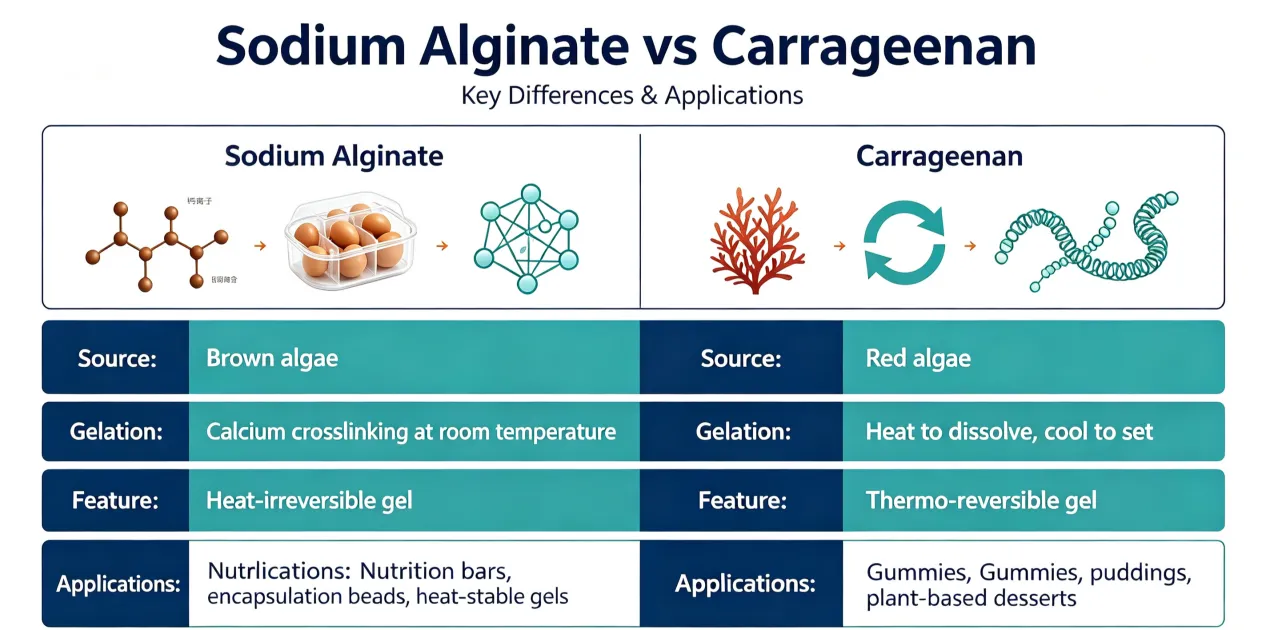
Key differences: Sodium alginate is extracted from brown algae and relies on calcium ions for cold cross-linking to form a thermally irreversible gel; carrageenan is extracted from red algae and forms a thermally reversible gel through a heating-cooling cycle, often in conjunction with potassium or calcium ions.
Molecular Mechanism: Fundamental Differences in Gelation Logic
Sodium Alginate
Derived from brown algae such as giant kelp and *Laminaria*; its molecular chains consist of mannuronic acid (M-blocks) and guluronic acid (G-blocks).
Gelation follows the classic "egg-box model": calcium ions bind to the G-block groups, allowing a 3D gel network to form at room temperature without the need for heat processing. Once the gel is formed, the structure remains intact and does not melt, even upon re-boiling.
Carrageenan
A sulfated polysaccharide extracted from red algae; commercially, it is categorized into three main grades—kappa (κ), iota (ι), and lambda (λ)—which exhibit vastly different properties:
κ-Carrageenan: Binds with potassium ions to form a firm, somewhat brittle gel.
ι-Carrageenan: Binds with calcium ions to produce a soft, highly elastic gel with low syneresis (water release).
λ-Carrageenan: Lacks gelling capability and serves solely as a thickener.
Carrageenan requires thorough heating to dissolve completely; a stable gel forms only during the cooling phase, as the molecular chains re-coil into a helical structure.

Thermal Properties: Irreversible Cold-Set Cross-linking vs. Thermoreversible Cycling
This is a common pitfall encountered during customer formulation development.
Sodium Alginate
Gelation is triggered by calcium ions at room temperature. The resulting gel withstands pasteurization and high-temperature processing, maintaining its shape even in high-heat environments.
Advantages: Suitable for end products requiring post-molding heat treatment or storage and transport in tropical regions with high temperatures.
Drawbacks: The cured gel cannot be remelted; defective products cannot be reprocessed.
Carrageenan
A typical thermoreversible hydrocolloid; it dissolves upon heating to 70–80°C and gels upon cooling, then melts back into a liquid state when reheated.
Advantages: Compatible with traditional hot-filling production lines; production scraps can be remelted and reused.
Drawbacks: If the end market is in a tropical region, the gel is prone to softening, syneresis (water release), and structural breakdown during prolonged high-temperature storage and transport.
Texture and Mouthfeel: Rigid, Brittle Gels vs. Highly Tunable, Elastic Gels
Sodium Alginate
The texture of the finished product is determined by the M/G ratio: High-G grades yield hard, brittle gels that fracture cleanly under external force, whereas high-M grades produce a softer texture. Overall elasticity is limited, resulting in minimal "jiggle" when shaken.
Carrageenan
Diverse textures can be achieved by selecting different grades. Kappa (κ)-carrageenan forms hard, brittle gels, while iota (ι)-carrageenan offers excellent elasticity, freeze-thaw stability, and low syneresis. It is common industry practice to blend κ-carrageenan with locust bean gum to enhance elasticity and reduce brittleness—a combination widely used in confectionery and dessert formulations overseas.
There is no absolute superiority; the choice depends on the application: choose sodium alginate for high-temperature shape retention; for thermal processing requiring a bouncy, elastic mouthfeel, prioritize the appropriate grade of carrageenan.
Dosage and Factory Processing Guidelines
Sodium Alginate
Typical gel dosage: 0.5%–1.0%
Soluble in cold water; no boiling required.
Key control points: Gelation relies on calcium ions rather than temperature. Excessive calcium release rates lead to surface skinning or granulation; insufficient calcium prevents gelation. Overseas factories commonly employ slow-release calcium salts and diffusion-based gelation processes.
Carrageenan
Typical gel dosage: 0.3%–1.0% (adjusted based on specific grade)
Requires heating to 70–80°C for full hydration; incomplete dissolution results in insufficient gel strength and a mottled appearance in the finished product.
Gelation occurs during cooling; Kappa (κ) types rely on potassium ions, Iota (ι) types rely on calcium ions, while Lambda (λ) carrageenan is used solely for thickening.
Suitable & Unsuitable Applications
Sodium Alginate
✔️ Suitable for: Encapsulated active ingredient beads, nutritional bars, cold-process production lines, products requiring high-temperature sterilization, storage and transport in tropical markets, and dietary supplements (label-friendly in most overseas regions).
✖️ Unsuitable for: Formulations lacking a controlled calcium source, processes requiring the remelting/reworking of gel waste, or confectionery seeking a highly elastic/bouncy texture.
Carrageenan
✔️ Suitable for: Hot-filled jelly puddings, vegan gummies, dairy/plant-based milk systems, reworkable production processes, and meat products or desserts with low syneresis (water release).
✖️ Unsuitable for: Certain segments of the European and American dietary supplement market (some clean-label standards restrict carrageenan), products requiring long-term storage/transport in high-temperature tropical climates, and production lines limited to cold-processing capabilities.
Should you require professional technical guidance, please feel free to contact us. Nourisi has a professional technical team that can customize the most suitable product solution for your project, and samples are available for your testing.
In the international food and dietary supplement industries, sodium alginate and carrageenan are two widely used seaweed-derived hydrocolloids. Despite their shared origin, the und

In oil and gas drilling operations, the prosperity of a drilling process heavily depends on the rheological properties and filtration behavior of drilling fluids . Uncontrolled flu
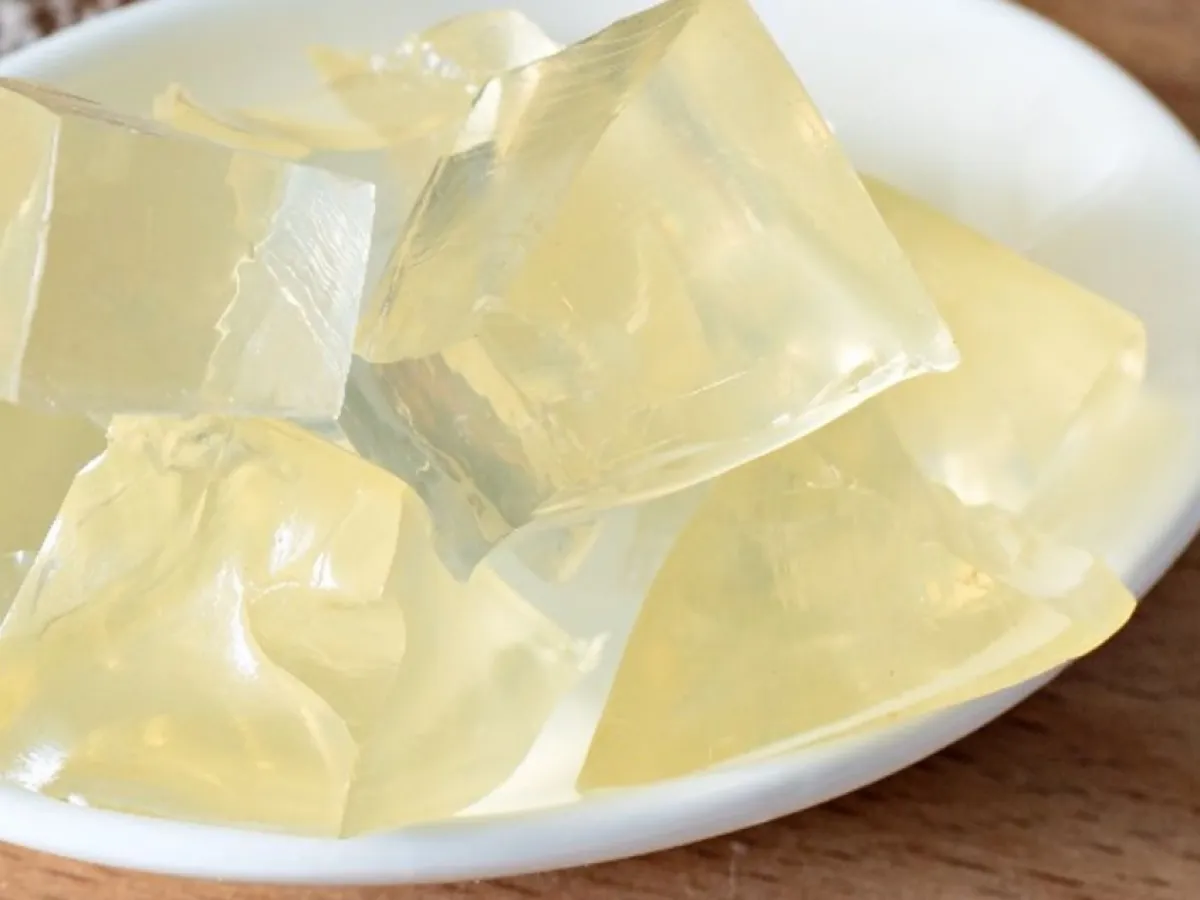
The first step in making gelatin gummies is to allow the gelatin to fully hydrate. Gelatin does not dissolve in cold water, but it can absorb water and swell in cold water. This pr
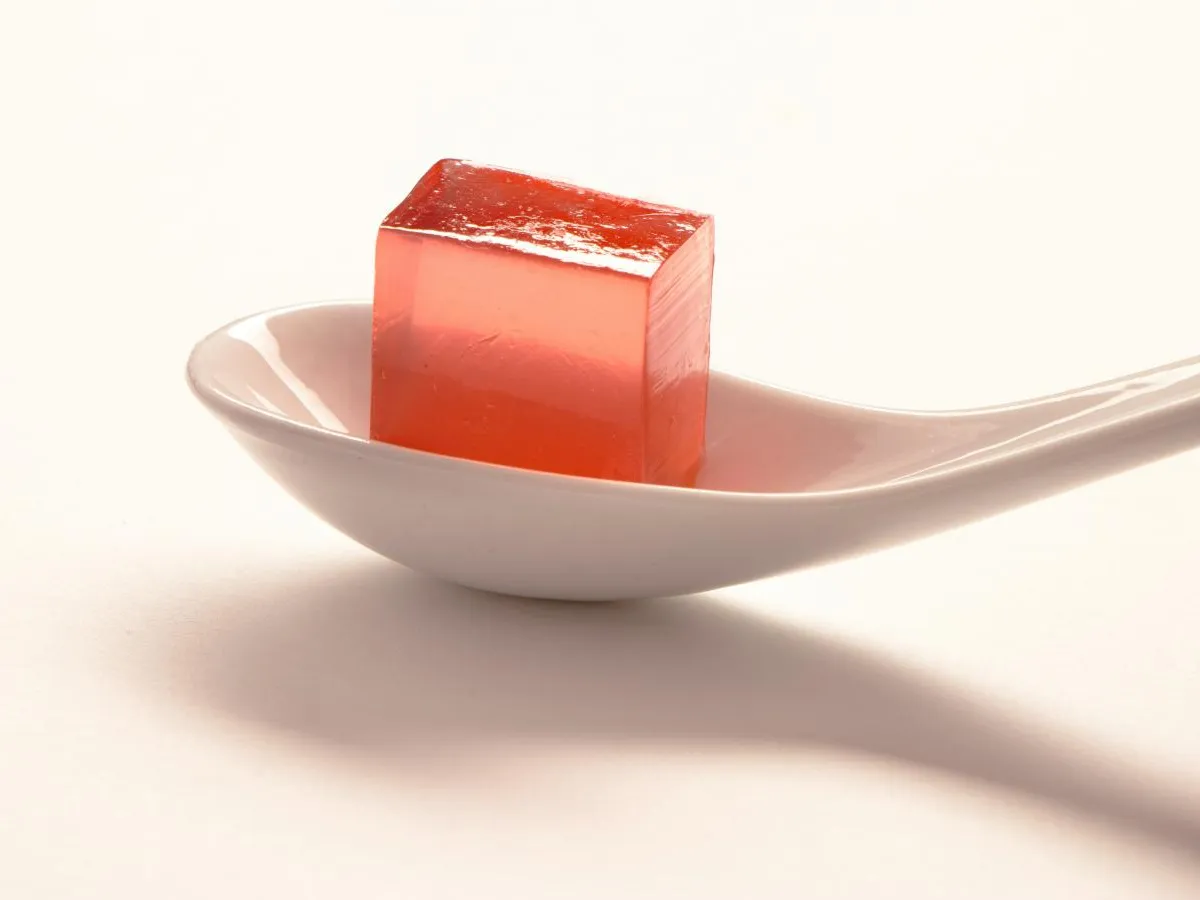
The key difference? Gelatin is a protein from animal collagen; agar is a carbohydrate from red algae.This fundamental distinction drives every other difference between them — and d

In the papermaking industry, modified starch is one of the core additives. Oxidized starch, cationic starch, and esterified starch are mainly used for surface sizing, internal sizi

The adoption of pectin in yogurt is not just anecdotal. According to market data, more than half of all new spoonable yogurt launches now contain pectin. This widespread acceptance
High concentrations of protein ingredients inherently carry a heavy, powdery mouthfeel and astringent notes. The key application detail of gelatin lies in its thermally reversible
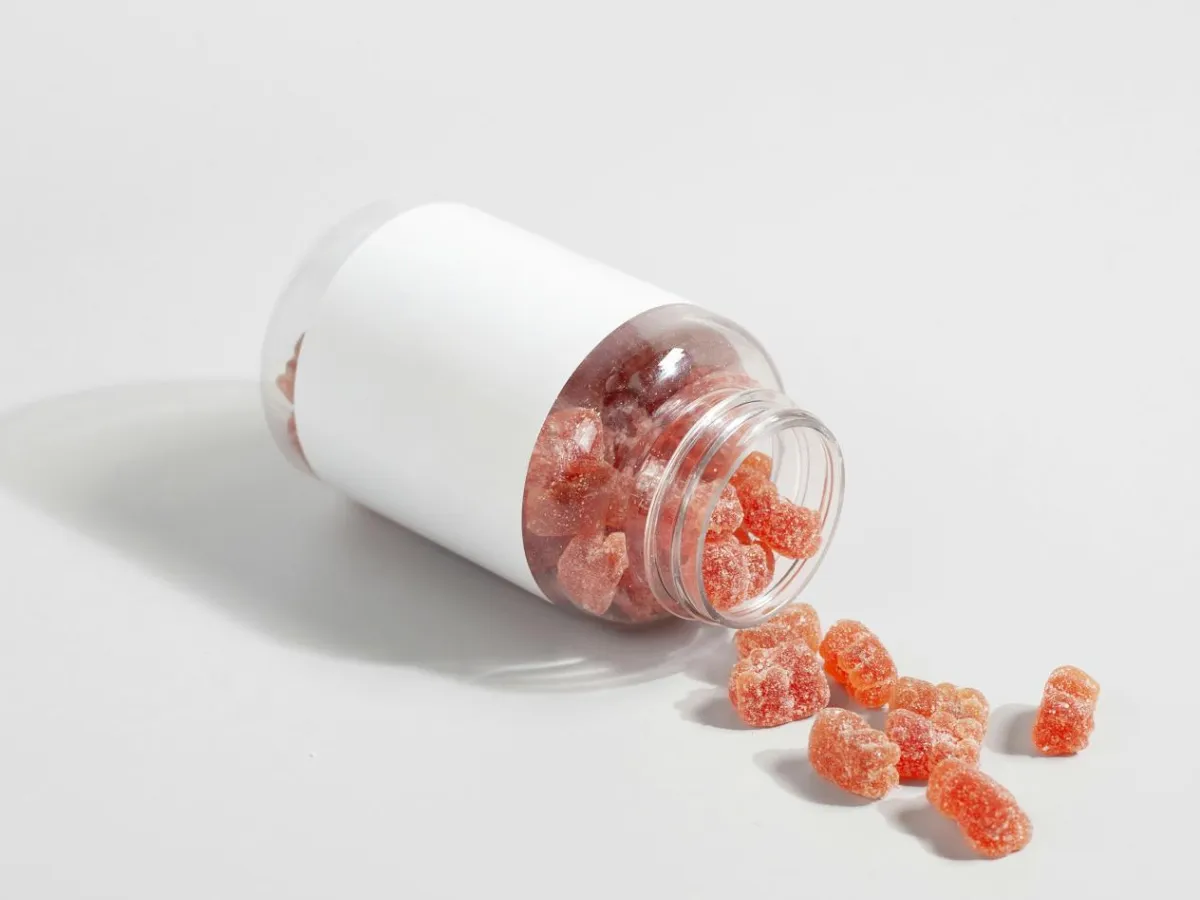
Today, vegan gummies are one of the fastest-growing segments in confectionery. And at the center of this shift stands pectin – a plant-derived hydrocolloid that is proving to be mo
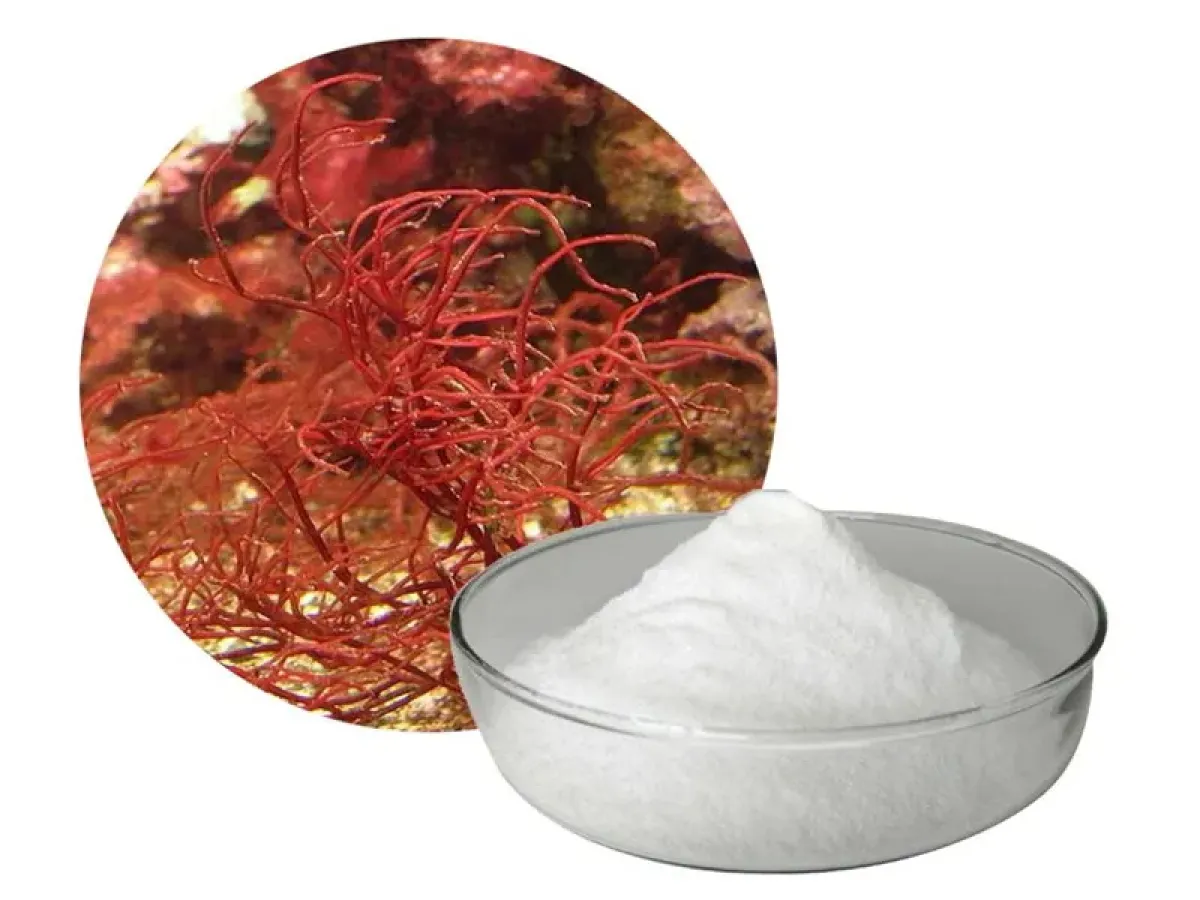
From a physicochemical perspective, carrageenan possesses unique solubility, dissolving in hot water at around 80°C to form a viscous, transparent solution, but insoluble in cold w

The primary role of CMC in toothpaste is to provide the desired texture, consistency, and stability. Specifically, it performs the following critical functions: