
Sodium alginate (E401) and agar (E406) are both natural hydrocolloids derived from seaweed; in the food industry, they serve functions such as thickening, stabilizing, and gelling. However, due to differences in their gel-formation mechanisms and resulting textures, each offers distinct advantages in practical applications.
1. Sodium Alginate
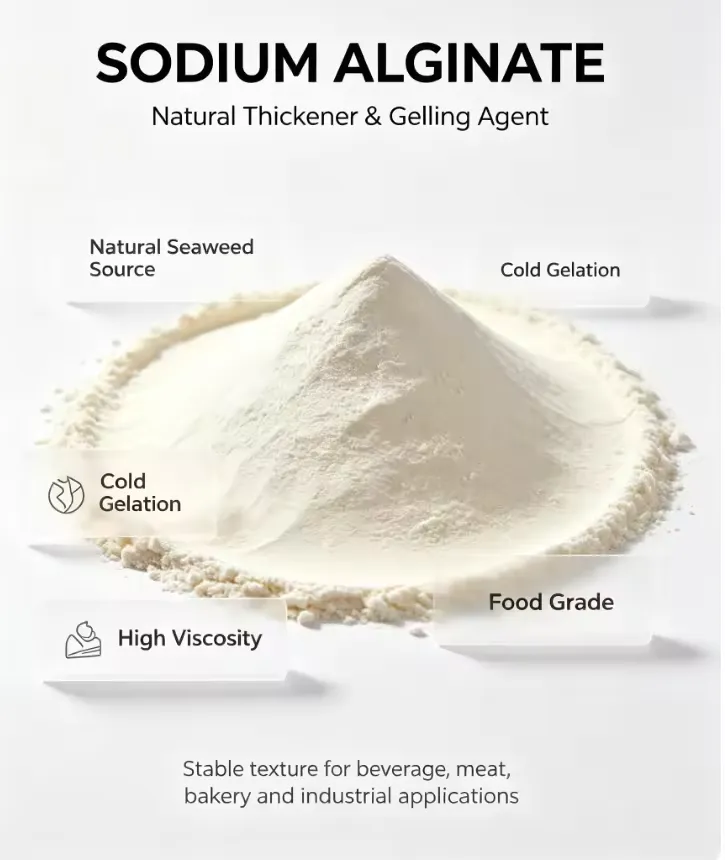
Sodium alginate is primarily derived from brown algae and exhibits excellent thickening, stabilizing, film-forming, and gelling properties.
One of its most notable characteristics is its ability to form a gel through a reaction with calcium ions. Consequently, beyond its use for conventional food thickening and stabilization, it is also employed in spherification, encapsulation, and the creation of specialized gel structures.
Key Characteristics
Excellent thickening and stabilizing effects
Forms gels upon reaction with calcium ions
Resulting gels possess a degree of elasticity and toughness
Suitable for encapsulation and spherification techniques
Compatible with a wide range of food systems
Common Applications
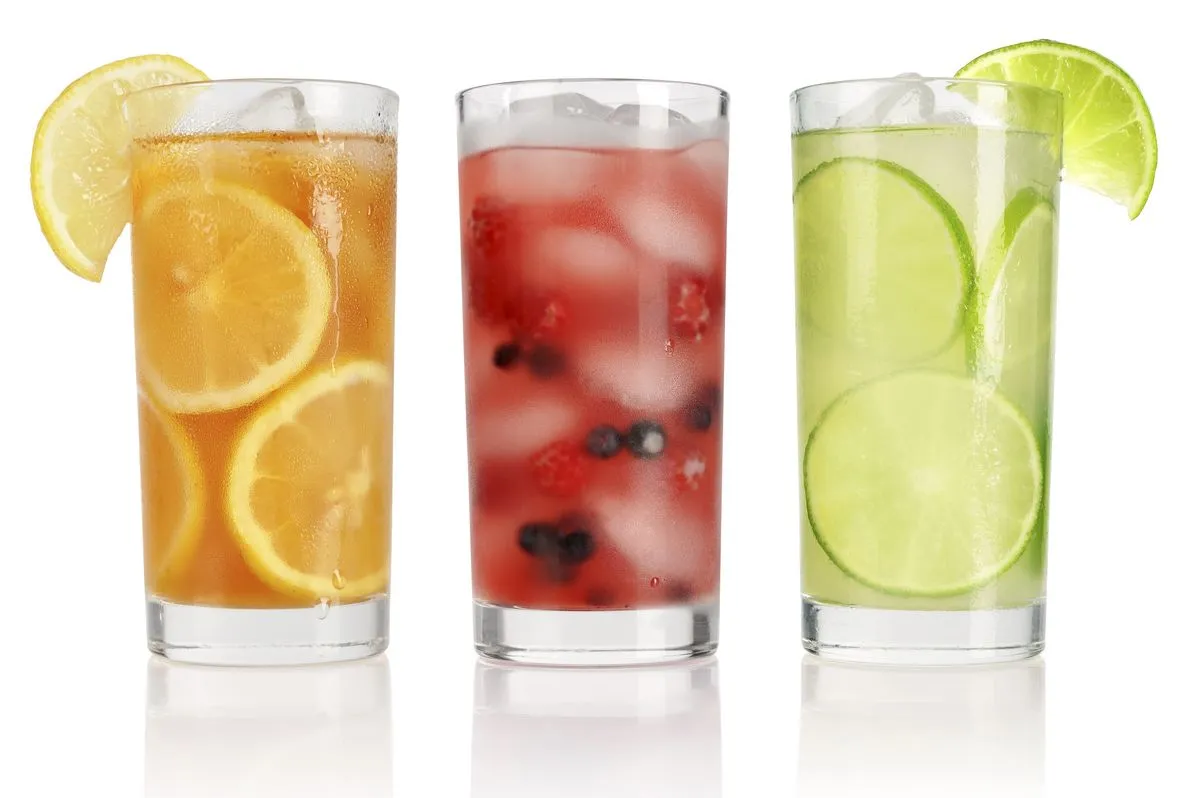
Beverages: Improves system stability and reduces particle sedimentation.
Dairy products: Enhances product stability and mouthfeel.
Jellies and gelled foods: Provides a flexible, elastic gel structure.
Imitation foods: Used to create spherified products such as artificial caviar and juice spheres.
Plant-based foods: Improves product texture and stability.
2. Agar
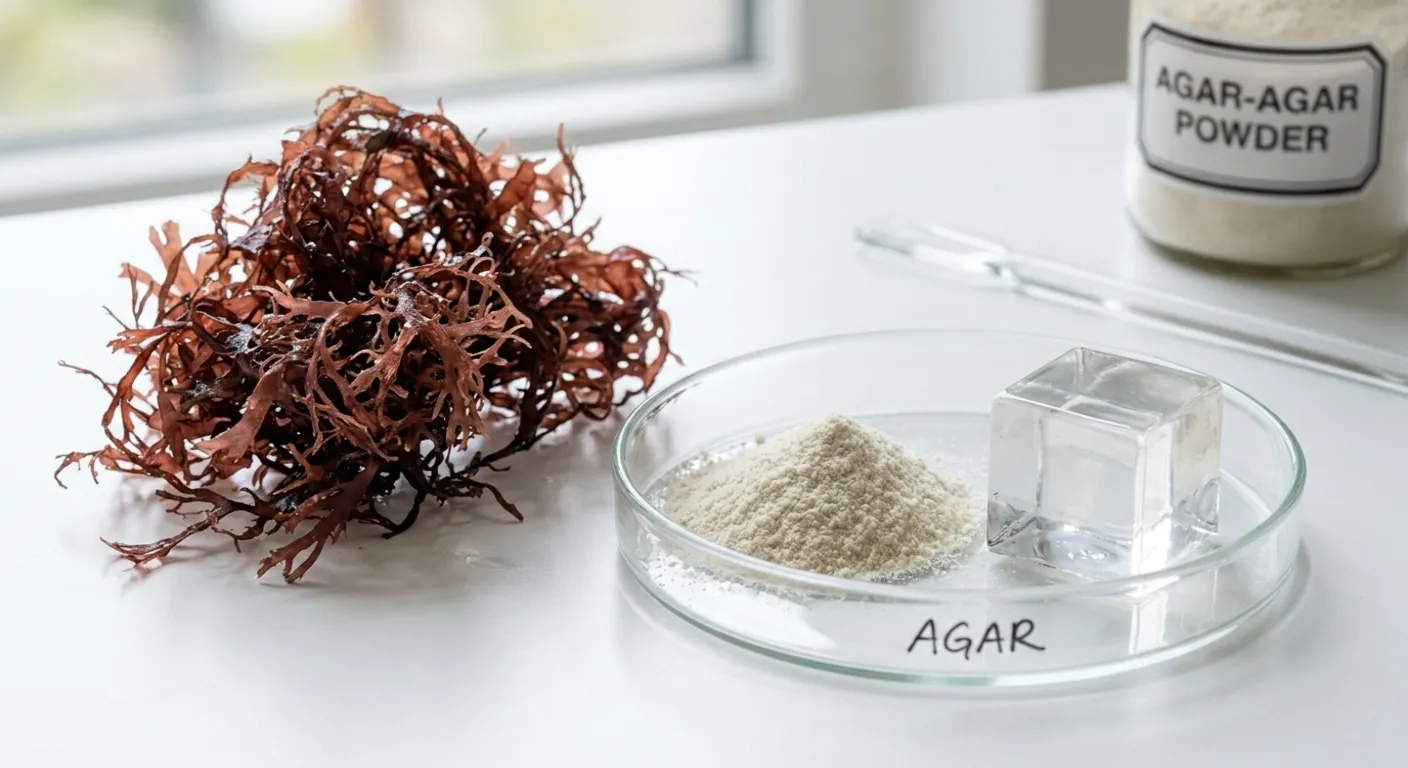
Derived primarily from red algae, agar is a widely used gel-forming food hydrocolloid.
Its key characteristics include high gel strength and the ability to form a stable gel structure upon cooling; the resulting products typically feature a crisp texture, firmness, and excellent shape retention.
Key Characteristics
High gel strength
Good shape retention
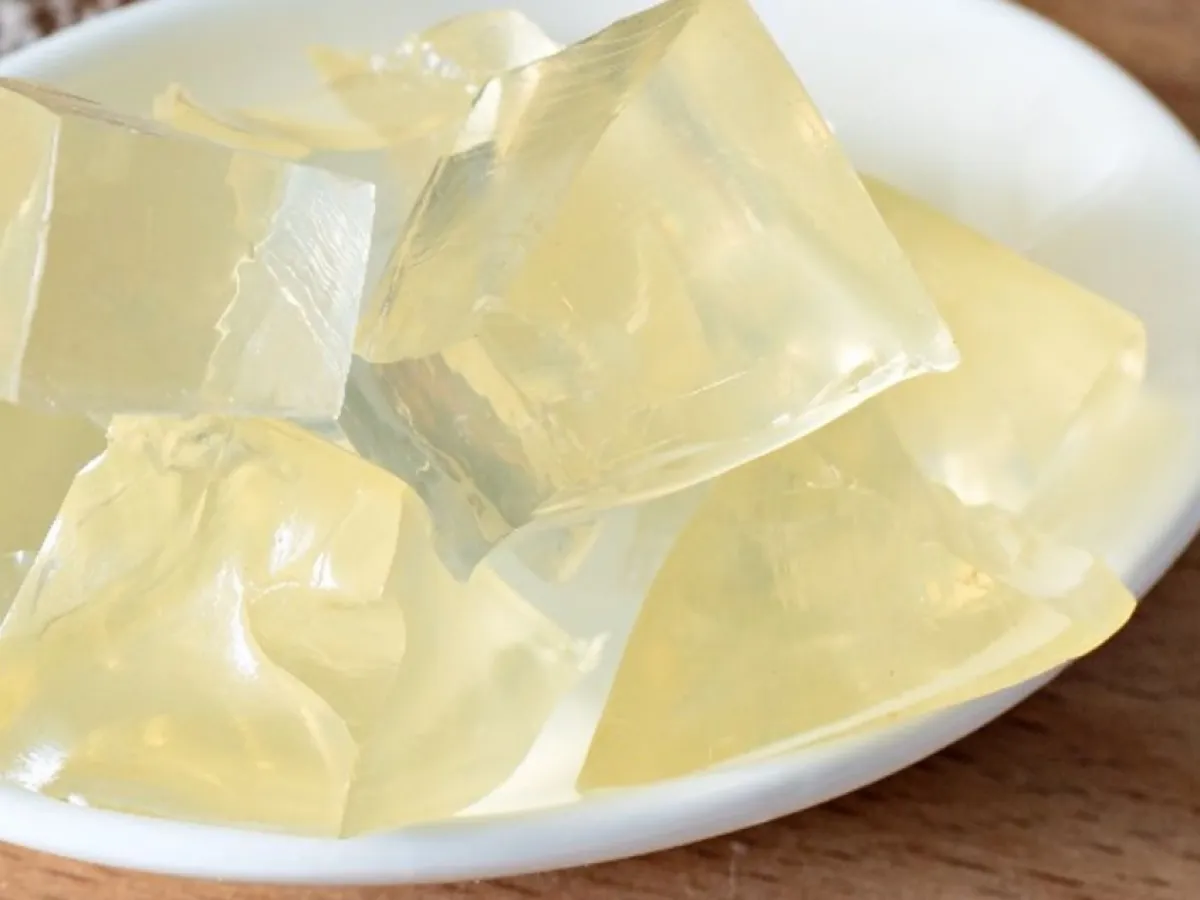
Clear gel structure
Crisp texture
Suitable for various gelled foods
Common Applications
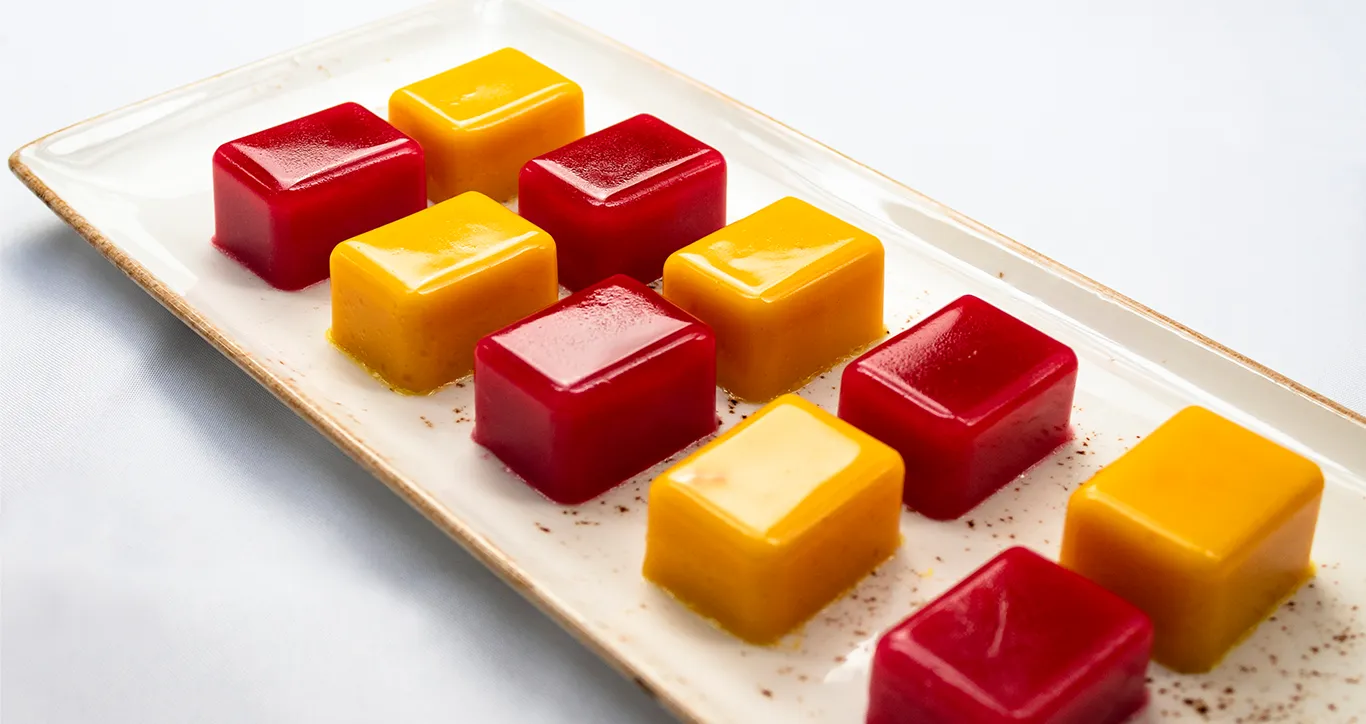
Jelly: Provides a stable gel structure and a crisp texture.
Jelly-like desserts and gelled foods: Forms a firm gel that is easy to slice.
Confectionery: Used to improve product structure and mouthfeel.
Bakery products: Used in certain fillings and gel-based foods.
Plant-based foods: Used to improve product structure.
3. Key differences between sodium alginate and agar
|
Comparison |
Sodium Alginate |
Agar |
|
E Number |
E401 |
E406 |
|
Main Source |
Brown seaweed |
Red seaweed |
|
Main Functions |
Thickening, stabilizing, gelling, film-forming |
Gelling, thickening, stabilizing |
|
Gel Characteristics |
Flexible, elastic and soft |
Firm, crisp and stable |
|
Key Advantage |
Calcium-ion gelation, encapsulation and spherification |
High gel strength and good shape retention |
|
Typical Applications |
Beverages, dairy products, jelly, plant-based foods, spherification products |
Jelly, jelly desserts, confectionery, plant-based foods, gel products |
|
Texture |
Elastic and flexible |
Firm and crisp |
|
Application Features |
Flexible and suitable for special gel structures |
Excellent for products requiring a firm and stable gel |
How to Choose?
While both sodium alginate and agar function as gelling, thickening, and stabilizing agents, the choice between them depends on the desired mouthfeel, gel strength, processing method, and end-use application.
Sodium alginate is generally more suitable for products requiring a flexible, elastic texture or processes involving calcium-induced gelation, spherification, and encapsulation. Conversely, agar is preferable when high gel strength, a crisp texture, and excellent molding or slicing properties are required. For products such as jellies, gel-based foods, and plant-based alternatives, either hydrocolloid may be selected based on specific formulation requirements.
In short, sodium alginate excels in versatility and specialized gelling functions, whereas agar is prized for its gel strength and crisp texture; the final choice should be determined by the specific product formulation and production process.
With over 20 years of experience in food hydrocolloids, we have built extensive expertise in both products and applications. Our professional technical team can provide flexible and practical solutions based on your specific product and processing requirements. Feel free to contact us anytime for more information or technical support.
Sodium alginate is primarily derived from brown algae and exhibits excellent thickening, stabilizing, film-forming, and gelling properties.

From an application perspective, collagen powder has good compatibility. It can be compounded with vitamins, hyaluronic acid, elastin, probiotics, dietary fiber, and many other ing
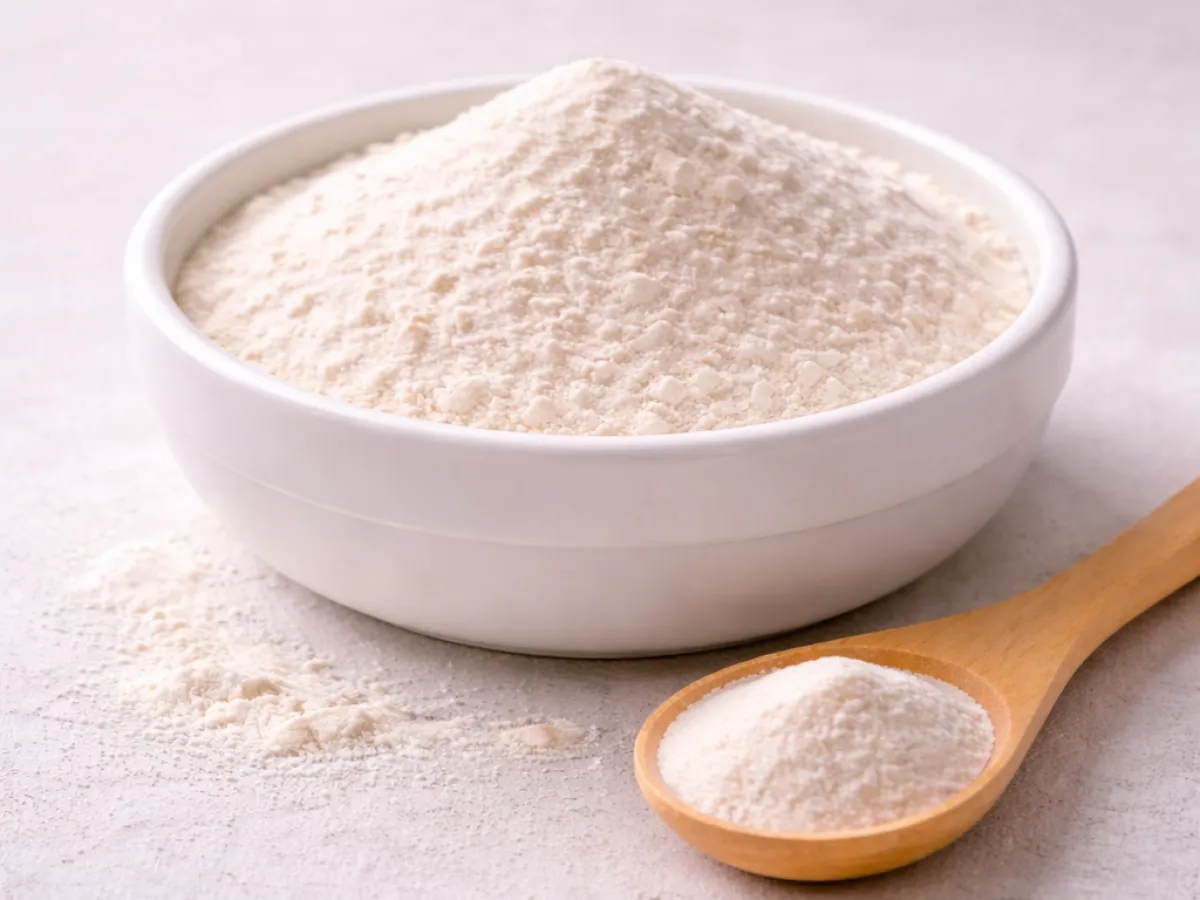
Modified starch relies on heat-induced gelatinization to form a viscous system; it establishes stable viscosity only after sufficient heating and provides no thickening effect in c

Single hydrocolloids always have limitations: xanthan gum alone provides insufficient oil dispersion and tends to release oil; agarose alone lacks suspension power and tends to sep
Dust pollution generated during coal mining, transportation, stockpiling, and handling poses severe health risks to workers, contaminates the environment, and creates safety hazard

This knowledge article explains the fundamental differences between edible and non-edible collagen casings across material composition, manufacturing, applications, handling, and p

Pullulan is emerging as one of the most promising solutions. This microbial exopolysaccharide, produced through fermentation by the fungus Aureobasidium pullulans, offers a unique
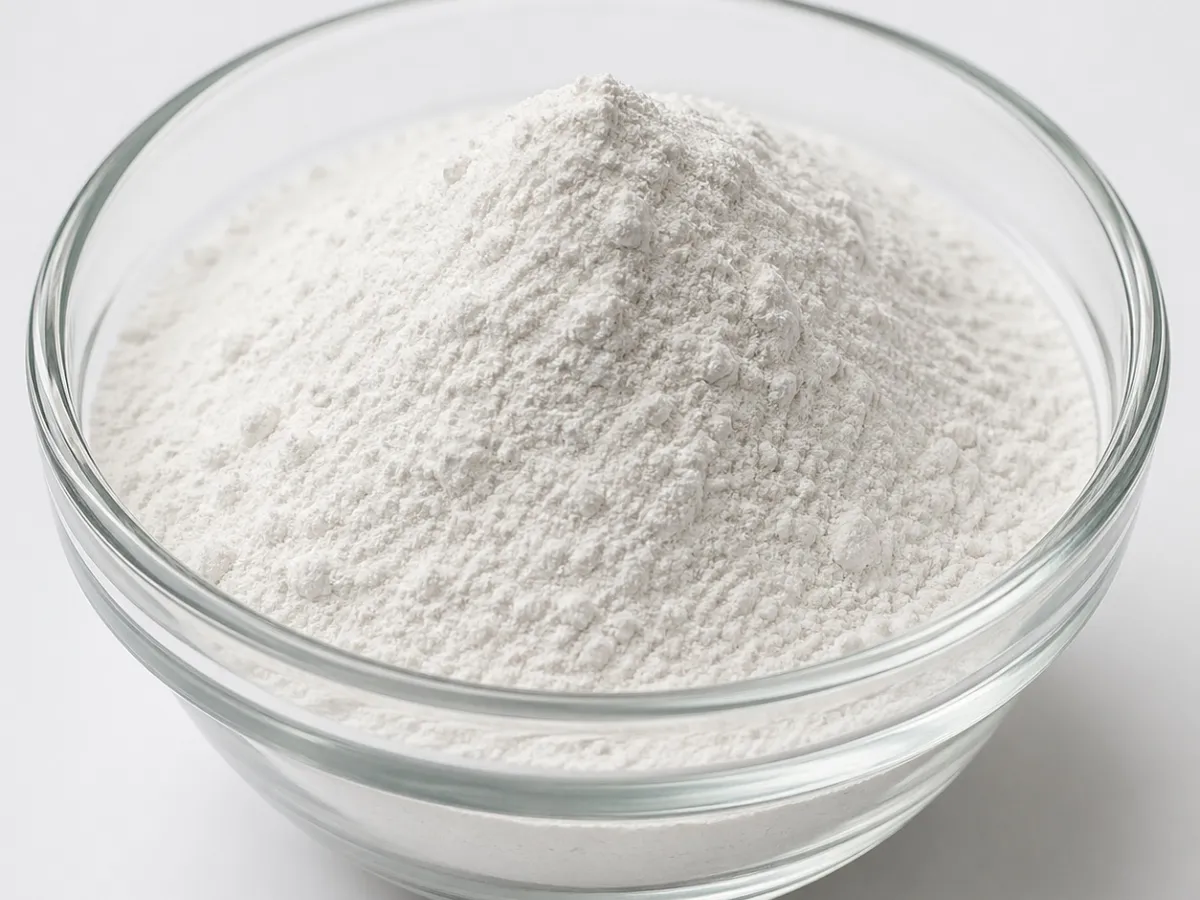
In the international food and dietary supplement industries, sodium alginate and carrageenan are two widely used seaweed-derived hydrocolloids. Despite their shared origin, the und

In oil and gas drilling operations, the prosperity of a drilling process heavily depends on the rheological properties and filtration behavior of drilling fluids . Uncontrolled flu
The first step in making gelatin gummies is to allow the gelatin to fully hydrate. Gelatin does not dissolve in cold water, but it can absorb water and swell in cold water. This pr