In sauce production, modified starch and xanthan gum constitute the most prevalent thickening and stabilizing system, with distinct functional roles: modified starch primarily establishes the sauce's body, viscosity, and texture, while xanthan gum ensures system stability, particle suspension, and processing compatibility. The vast majority of commercial sauces produced overseas utilize a combination of the two to balance mouthfeel, processing performance, and shelf stability.
Differences in Core Functions and Thickening Mechanisms
Modified Starch (E1422 / E1442; modified food starch)
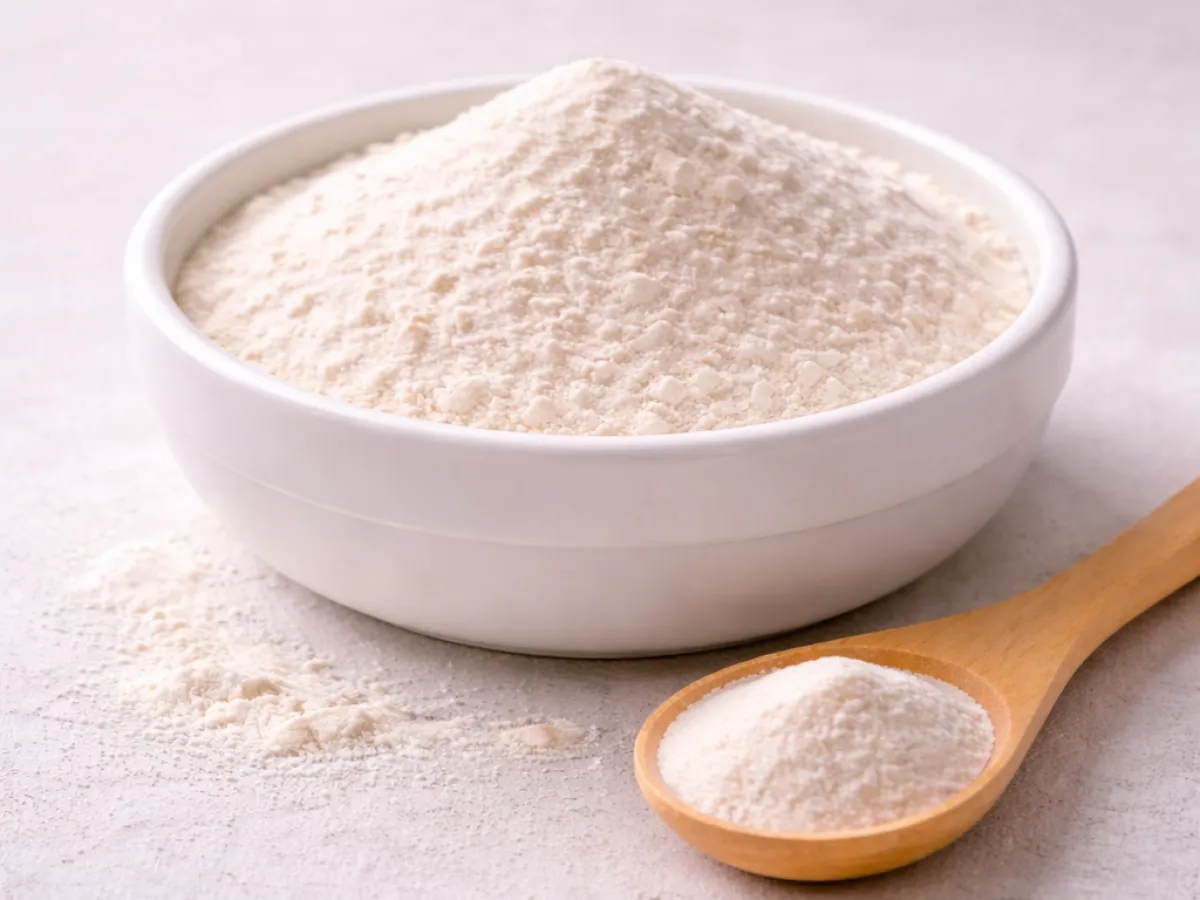
Modified starch relies on heat-induced gelatinization to form a viscous system; it establishes stable viscosity only after sufficient heating and provides no thickening effect in cold water. Typically used at relatively high dosage levels, it serves as the primary thickening backbone of the sauce and offers a distinct cost advantage, making it suitable as the foundation for the sauce's texture. Its strengths lie in providing a full, rich, and uniform mouthfeel, ensuring the sauce adheres well and offers a substantial, satisfying consistency. However, standard modified starch is prone to viscosity loss under prolonged high-temperature or highly acidic conditions, and it carries risks of syneresis (water separation) and retrogradation (hardening) during storage.
Xanthan Gum (E415)
Xanthan gum is a water-soluble hydrocolloid that dissolves in both cold and hot water without the need for heat-induced gelatinization; it achieves highly efficient thickening even at very low dosage levels. It relies on a high-molecular-weight network structure to bind water, rather than depending on granule gelatinization. The product exhibits excellent pseudoplastic properties: it maintains high viscosity and system stability at rest, undergoes a rapid drop in viscosity under shear forces (such as stirring, pumping, or squeezing), and quickly regains its consistency once the force is removed. It demonstrates exceptional resistance to acids, alkalis, and high salt concentrations, as well as outstanding stability during high-temperature sterilization and freeze-thaw cycles, remaining virtually unaffected by the conditions involved in sauce processing and storage.
Differences in Mouthfeel and Texture
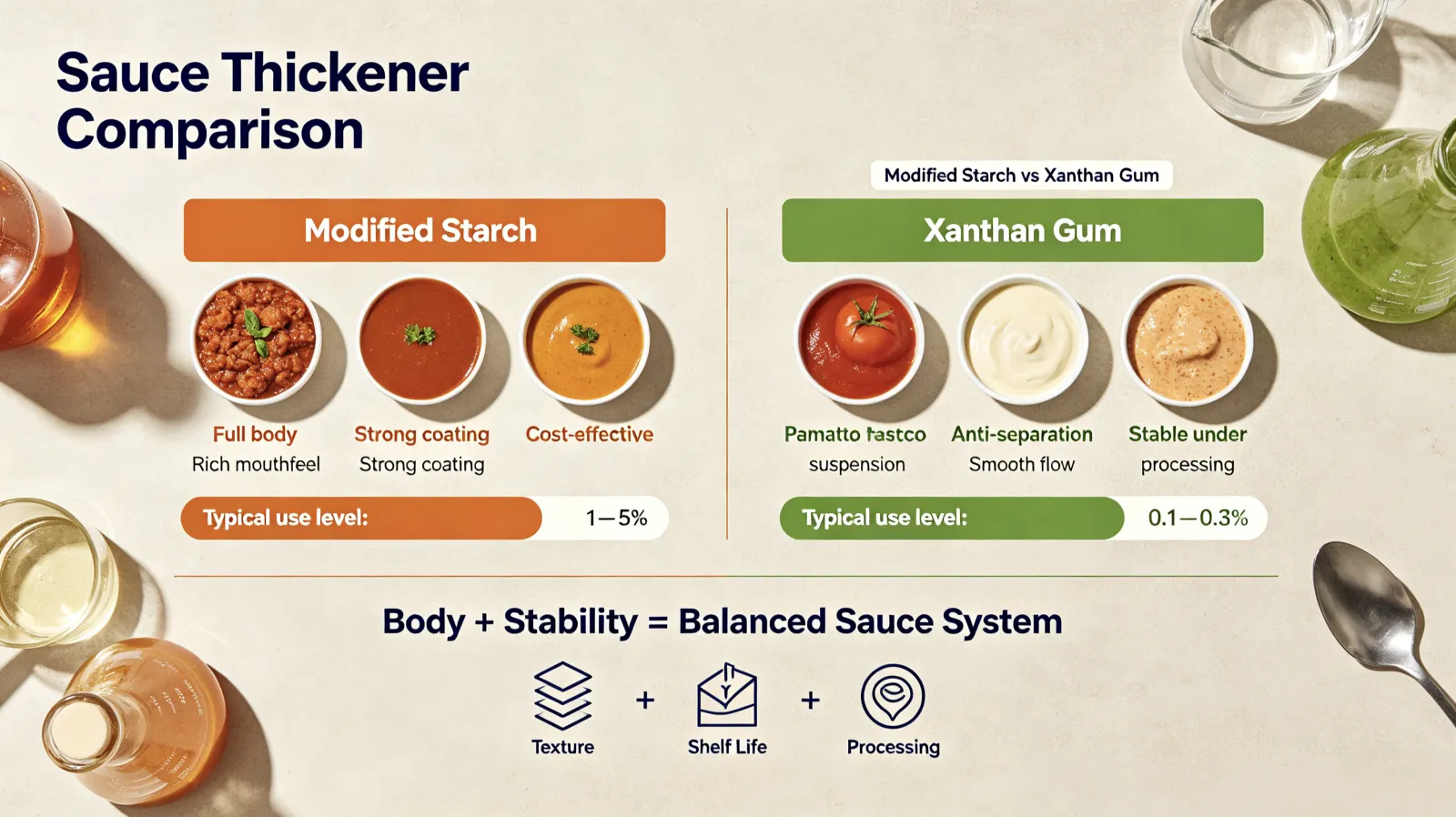
Modified Starch: Creates a full-bodied, substantial texture that is dense and highly adhesive; it provides a rich, substantial mouthfeel without any sense of lightness or airiness, serving as the primary source of body for heavy sauces. It is ideal for sauce systems requiring a rich consistency and excellent cling.
Xanthan Gum: Produces a smooth, uniform texture and a light, delicate body without a heavy, filling sensation. When used alone, it tends to result in a "hollow" body and excessive slipperiness, failing to build a substantial mouthfeel; it functions solely to stabilize the system rather than providing the primary structural body or texture.
Differences in Processing and Storage Stability
Compatibility with Thermal Processing and Sterilization
Cross-linked modified starches are compatible with conventional high-temperature sterilization, though prolonged high-temperature cooking and continuous shearing can lead to a drop in viscosity; xanthan gum withstands UHT (Ultra-High Temperature) and autoclave sterilization with high viscosity retention, offering superior processing stability.
Compatibility with Acidic, Alkaline, and High-Salt Systems
Acidic and high-salt environments inhibit the swelling of ordinary starches, resulting in insufficient consistency and issues like separation or water release (syneresis); xanthan gum maintains stable viscosity across a wide pH range and in high-salt systems, making it highly suitable for acidic sauces, marinades, and high-salt sauces.
Shelf Life and Freeze-Thaw Stability
Modified starches are prone to retrogradation during long-term refrigerated storage, leading to water release, separation, and hardening; xanthan gum resists water release and separation while offering excellent freeze-thaw stability, significantly enhancing the shelf-life stability of sauces and preventing quality deterioration during storage.
Internationally Standardized Formulation Strategy
Leading overseas sauces typically employ a composite system combining a low dosage of xanthan gum with modified starch. Modified starch provides the sauce's core mouthfeel and body, while xanthan gum addresses challenges such as processing fluctuations, storage-related separation, syneresis (water release), particle settling, and stability under varying pH and temperature conditions. This approach balances sensory quality with product stability, meeting the requirements for industrial-scale production and long shelf life.
Summary of Key Comparisons
Core Value of Modified Starch: Builds body, enhances mouthfeel and viscosity, reduces formulation costs, and improves sauce adhesion.
Core Value of Xanthan Gum: Stabilizes the system, suspends particles, withstands changes in processing and storage environments, and prevents separation and syneresis.
For any technical support needs, do not hesitate to reach out. Our professional technical team can develop tailored formulation solutions for you one-on-one.
Modified starch relies on heat-induced gelatinization to form a viscous system; it establishes stable viscosity only after sufficient heating and provides no thickening effect in c

Single hydrocolloids always have limitations: xanthan gum alone provides insufficient oil dispersion and tends to release oil; agarose alone lacks suspension power and tends to sep
Dust pollution generated during coal mining, transportation, stockpiling, and handling poses severe health risks to workers, contaminates the environment, and creates safety hazard
This knowledge article explains the fundamental differences between edible and non-edible collagen casings across material composition, manufacturing, applications, handling, and p
Pullulan is emerging as one of the most promising solutions. This microbial exopolysaccharide, produced through fermentation by the fungus Aureobasidium pullulans, offers a unique
In the international food and dietary supplement industries, sodium alginate and carrageenan are two widely used seaweed-derived hydrocolloids. Despite their shared origin, the und

In oil and gas drilling operations, the prosperity of a drilling process heavily depends on the rheological properties and filtration behavior of drilling fluids . Uncontrolled flu
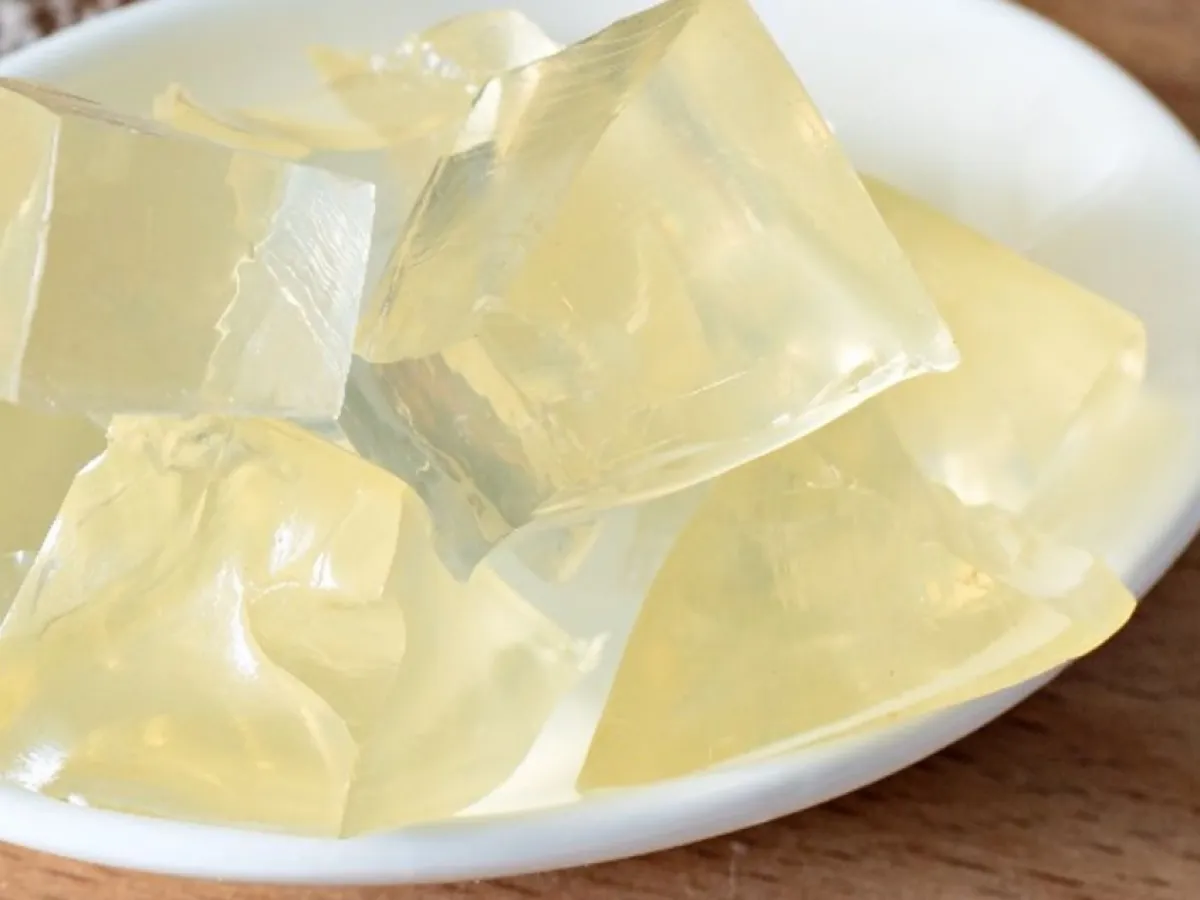
The first step in making gelatin gummies is to allow the gelatin to fully hydrate. Gelatin does not dissolve in cold water, but it can absorb water and swell in cold water. This pr
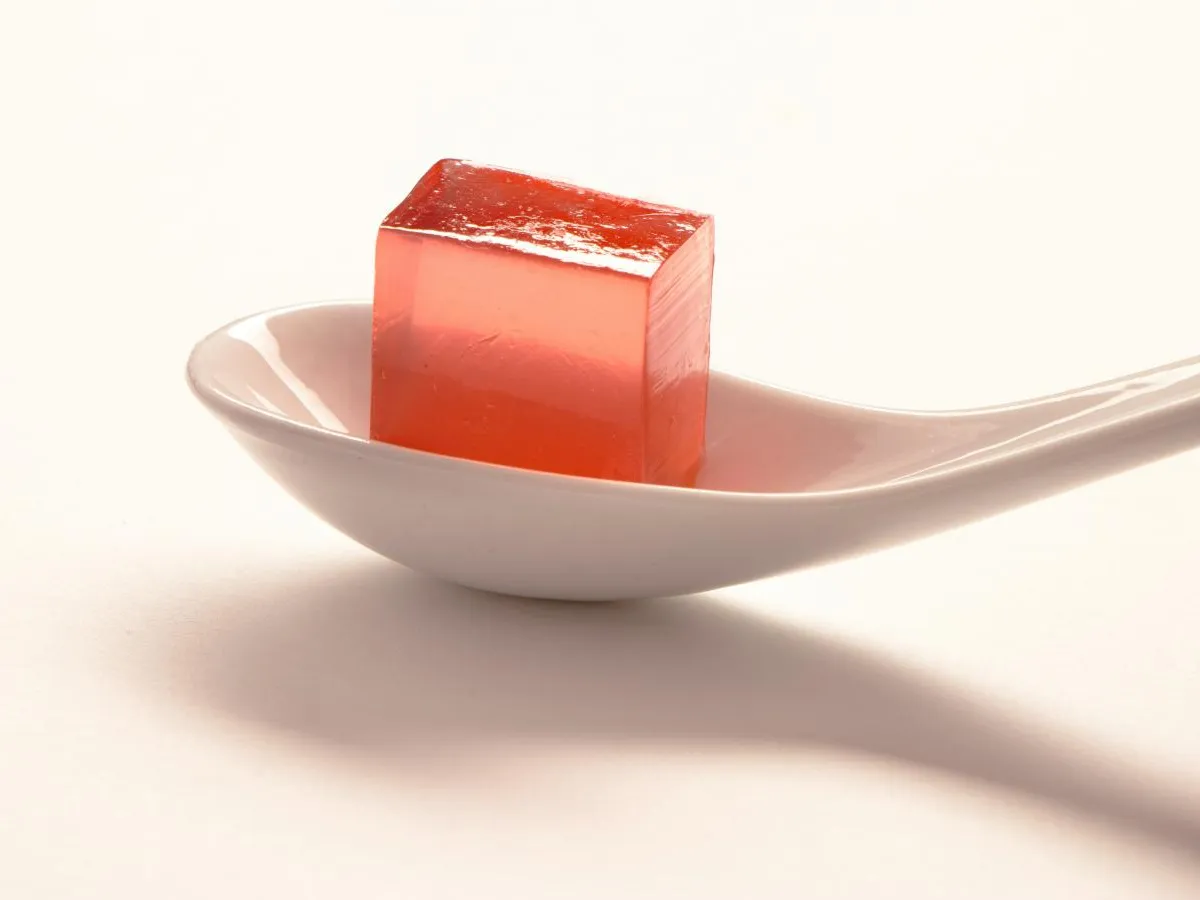
The key difference? Gelatin is a protein from animal collagen; agar is a carbohydrate from red algae.This fundamental distinction drives every other difference between them — and d

In the papermaking industry, modified starch is one of the core additives. Oxidized starch, cationic starch, and esterified starch are mainly used for surface sizing, internal sizi